
The Structural Reality After a Not-At-Fault Claim
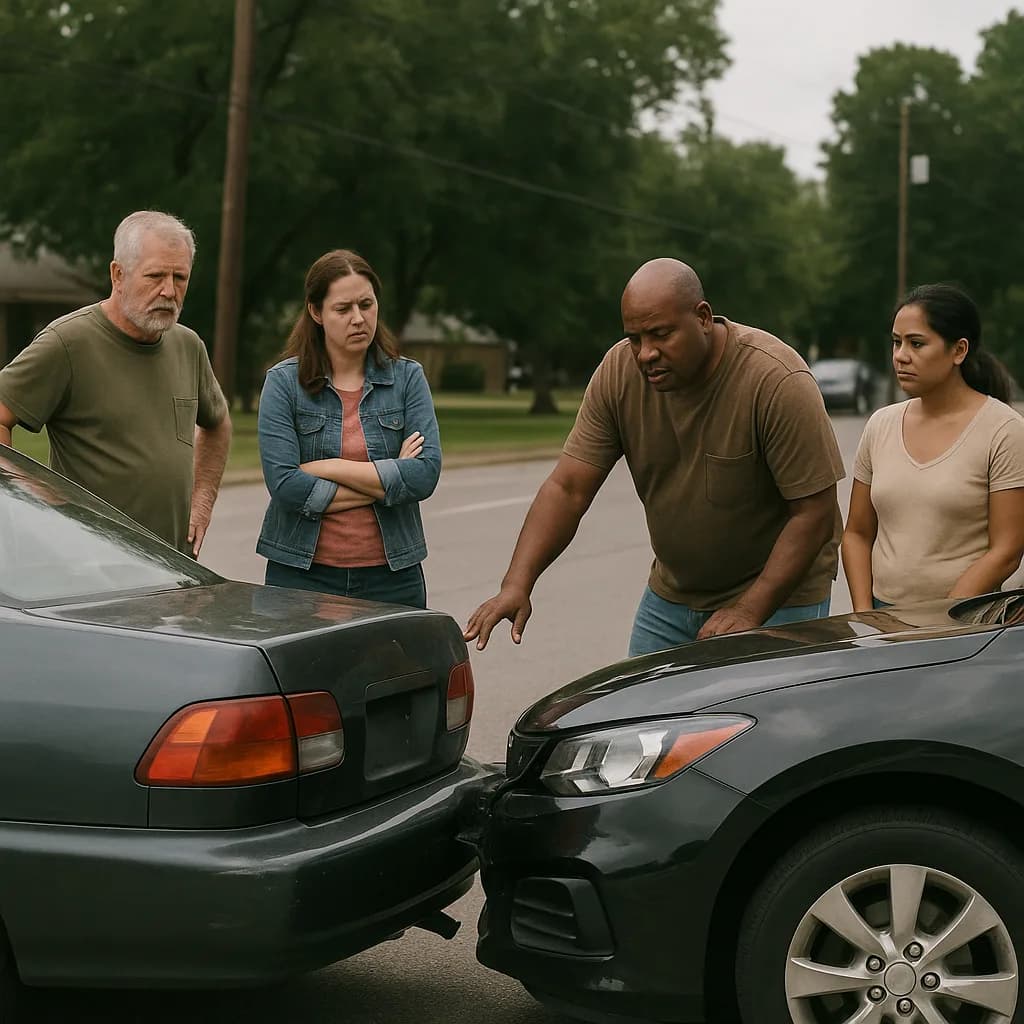
You were stopped at a red light. Another driver hit you from behind. You filed a claim through your own collision coverage because the other driver's insurer was slow to respond, or you needed your car repaired immediately. The accident was not your fault by any reasonable measure, yet your carrier just notified you of a rate increase at renewal—and because you insure three vehicles on one policy, the increase applies to all three.
This outcome feels unjust, but it reflects how insurers price risk. Carriers use claim history as a predictor of future claims, regardless of fault determination. A driver who files a claim—even a not-at-fault claim—statistically files more claims over time than a driver with no claims at all. Multi-car policies compound this effect: the rate adjustment applies to every vehicle on the policy, not just the one involved in the accident.
Compare car insurance rates in your state
Get quotes from licensed carriers — no obligation, no spam, results in minutes.
Get Your Free QuoteNot-At-Fault Premium Increase
The increase persists for three to five years.
Insurance Information Institute, 2026
Why Carriers Raise Rates When You Weren't At Fault
Insurers distinguish between fault and risk. Fault is a legal determination: who violated traffic law, who caused the collision. Risk is a statistical prediction: how likely you are to cost the insurer money in the future. These are not the same thing.
A not-at-fault accident still puts you in a higher-risk category because you filed a claim. Actuarial models show that drivers who file any claim—regardless of fault—file more claims over the next three to five years than drivers with clean records. The reasons vary: some drivers are more likely to drive in high-traffic areas where accidents happen frequently, some are less defensive, some simply have bad luck. The carrier cannot distinguish these factors from claims data alone, so it prices all claim-filers as higher risk.
When you file through your own collision coverage rather than waiting for the at-fault driver's insurer to pay, the rate impact is often larger. Your carrier paid the claim, which means it absorbed the loss. Even if your carrier later recovers the money through subrogation, the claim still appears on your record as a loss your insurer handled.
The blocker: your household's multi-car discount does not protect you from a rate increase after a not-at-fault claim—the increase applies to every vehicle on the policy.
How the Increase Spreads Across Multiple Vehicles

Multi-car policies calculate premiums by rating each vehicle individually, then applying the multi-car discount to the total. When one vehicle triggers a rate increase, the carrier re-rates that vehicle at the higher tier, recalculates the policy total, and applies the discount to the new total. The result: every vehicle on the policy sees a higher premium, even though only one was in the accident. The increase is not evenly distributed—the vehicle involved typically absorbs the largest share, but the other vehicles still cost more than they did before the claim.
This structure creates a compounding effect for households with multiple cars. A single not-at-fault accident can add several hundred dollars per year to a three-car policy. The multi-car discount still applies, but it applies to a higher base rate. Some households respond by removing the accident-involved vehicle from the policy or switching it to a separate policy, but this usually eliminates the multi-car discount entirely and costs more overall.
Related Articles





State Rules and Accident Forgiveness Programs
Some states limit how insurers can use not-at-fault accidents in rating. California, for example, prohibits rate increases for accidents where the insured driver was not at fault and did not contribute to the collision. Oklahoma and Massachusetts have similar restrictions. Most states, however, allow carriers to surcharge for any claim, regardless of fault.
Accident forgiveness programs—offered by many large carriers—waive the first at-fault accident surcharge for drivers who meet eligibility requirements, typically three to five years of claim-free driving. These programs rarely cover not-at-fault accidents. The forgiveness applies to fault determination, not claim filing. If you filed a claim through your own collision coverage, the carrier treats it as a loss regardless of who caused the accident, and forgiveness does not apply.
A few carriers do offer claim forgiveness that covers not-at-fault accidents, but these programs are uncommon and usually require enrollment before the accident occurs. If your household insures multiple vehicles and you want protection against not-at-fault surcharges, compare carriers that offer broad claim forgiveness rather than fault-specific forgiveness.
Surcharge Duration Multi-State
3–5 years
Most states allow insurers to apply not-at-fault accident surcharges for three to five years from the claim date. The surcharge decreases over time in some states, but the accident remains on your record and affects your rate until it ages off completely.
State insurance department regulations, 2026
What to Do Before Your Policy Renews
If your carrier notified you of a rate increase after a not-at-fault accident, compare quotes from other carriers before your renewal date. Not all insurers weigh not-at-fault claims equally. Some carriers apply smaller surcharges, some ignore not-at-fault accidents entirely in states where it is permitted, and some offer claim forgiveness that covers your situation.
When comparing quotes, provide accurate information about the accident: the date, the claim amount, and whether you filed through your own collision coverage or the other driver's liability coverage. Withholding this information produces inaccurate quotes and can result in policy rescission if the carrier discovers the omission later. Multi-car households should request quotes that include all vehicles on one policy to preserve the multi-car discount—splitting vehicles across separate policies usually costs more than absorbing the surcharge on a combined policy.
Compare Carriers That Rate Multi-Car Policies Fairly
The rate increase after a not-at-fault accident is not uniform across carriers. Some apply surcharges aggressively, others treat not-at-fault claims as neutral events, and a few offer programs that forgive the first claim regardless of fault. Households with multiple vehicles benefit most from carriers that apply smaller surcharges and preserve the multi-car discount even after a claim. Compare quotes from carriers that write multi-car policies in your state, provide the accident details accurately, and evaluate the total premium for all vehicles together—not just the one involved in the accident.